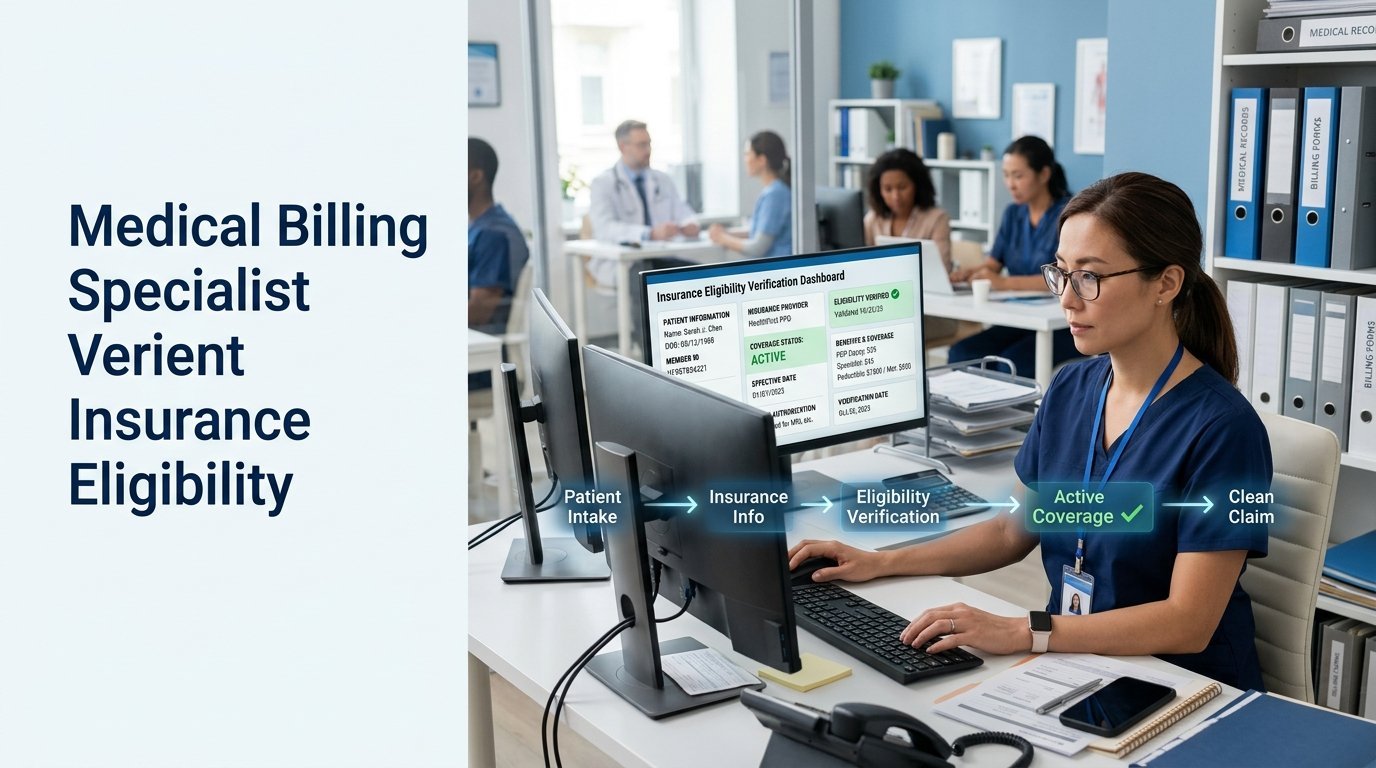
Understand the meaning of eligibility verification medical billing, importance of insurance verification, how it operates, and ways that medical practices can avoid billing issues.
A patient can have an insurance card, but that doesn’t necessarily mean the patient’s insurance is active, or that a particular service is covered by the payer. If eligibility is not verified prior to an appointment, medical practices may be subject to claim denials, patient balances, delayed reimbursement, and pointless billing.
That’s why health insurance verification is a critical component of the HC Revenue Cycle Management. Practices can identify potential problems early and make informed billing decisions before services are rendered by confirming insurance cover and benefits in advance.
Healthcare providers’ eligibility verification is more than just confirming that an insurance plan is available. This includes examining key coverage considerations that could impact patient liability and claims. This guide gives an overview of eligibility verification, how it works, some of the common problems and how to use professional RCM support to manage eligibility verification more effectively.
What is Eligibility Verification in Medical Billing?
Eligibility verification in medical billing is the confirmation of a patient’s insurance coverage before they receive medical services.
The process typically involves determining if the patient has active insurance coverage, and examining insurance coverage, benefits, and patient responsibility. The information collected in the process of verification could be used by the medical practice to decide if further actions, including prior authorization, are needed.
Eligibility verification provides answers to some basic questions like:
Does the patient have insurance coverage in place?
Does the person paying for the service pay for the planned service?
What type of benefits does the patient have under their plan?
Does it require a copayment, coinsurance or deductible?
Is the provider or practice participating with the patient’s plan?
Does prior authorization need to be obtained?
Are there any other data that might impact claim submission and/or reimbursement?
Not all of this information will be available for every plan and every payer. As such, it is advisable to verify carefully, not just from information printed on an insurance card.
Why is Eligibility Verification important?
If insurance issues are only identified after a service is rendered, it results in additional work for the practice and patient.
Proper insurance verification can assist practices in identifying potential claim problems before they are even claimed. If the coverage is verified early, billing staff will have a better chance of identifying coverage issues and sending patient the needed information.
2. Educates the public about the benefits of water conservation methods.3. Promotes water conservation practices.
If you have inaccurate or stale insurance data, you can have billing and claim problems. When the claim is submitted, it is helpful for the practice to double check the coverage data as part of the revenue cycle process before it gets to the claim filing stage.
2. Improves Patient Communication
Patients may not be aware of the benefits of their insurance. A verification process can be helpful in giving the practice useful information on what to expect from patients and help them communicate more clearly about what patients will need to pay.
3. Supports Cleaner Claims
Correct patient and payer data is essential when creating medical claims. Eligibility checking can assist in uncovering problems before claims are submitted that may relate to coverage.
4. Guards the Revenue Cycle
Delays in reimbursement and further follow-up can result from unresolved insurance issues. Well-designed verification processes can help practices handle issues up front and throughout the revenue cycle.
5. Reduces Administrative Rework
If eligibility issues are identified after the claim is billed, staff may have to reach out to patients to correct information, resubmit claims, or take time to investigate responses from payers. Identifying problems early can minimize the amount of unneeded administrative tasks.
How Does Insurance Eligibility Verification Work?
The steps in the workflow may vary from one practice to another and from one payer to another, but there are certain steps that are key.
Patient Insurance Information is collected in Step 1.
The practice gathers insurance information from the patient including the insurance card and patient information.
Staff need to watch for information like the patient’s name, member identification number, group information and payer details.
Step 2: Confirm Coverage
Billing/Verification checks if the patient’s insurance is active for the date of service.
Even if you have coverage, it doesn’t always cover all services. This should be reviewed with the benefit information available to them when appropriate, the team should.
Step 3: Review Insurance Benefits
The team conducts a patient plan review of insurance benefits relevant to the patient’s plan.
This can involve reviewing the applicable deductibles and copayments, coinsurance, covered services, and other plan requirements, depending on the information available.
Step 4: See if there are any other requirements.
There are some services that require extra payer requirements. For instance, some procedures or services might require prior authorization.
Eligibility verification should then be seen as a component of a larger pre-service process, but not just an active-inactive check.
Step 5: Record the information.
When a practice is verified, the results should be documented correctly in the practice’s workflow or billing system so that they can be referred to by relevant staff during the scheduling, registration, billing, and claims processes.
Keep information up-to-date as needed
Insurance details may vary. Patients can switch plans, drop coverage or update their insurance details.
Practices should, therefore, not presume that information that has been previously confirmed will continue to be correct.
What Information Should Surgical Practices Get Confirmed?
Comprehensive verification should be based on information that could impact the billing and reimbursement.
Depending on the payer and available eligibility information, practices may review:
Patient identification information
Insurance member information
Coverage status
Effective dates
Plan information
Copayment requirements
Deductible information
Coinsurance
Covered services
Patient responsibility
Provider participation information
Prior authorization requirements
Other payer-specific requirements
The aim is not just to gather more data. The objective is to determine what information can impact the patient’s appointment, claim, reimbursement, or financial responsibility.
Common Eligibility Verification Challenges:
When a practice has a verification process, there are a number of problems that can make it challenging.
Outdated Insurance Information
Patients can present an old insurance card or may not inform about a change in coverage. If the practice bills the wrong person, then the claim might need to be worked.
Inactive Coverage
The date of service may have fallen outside patient’s coverage. If it’s identified prior to the appointment, the practice has more time to fix the problem.
Incomplete Benefit Information
Active plan doesn’t imply that all services are covered. Practices must differentiate between “active coverage” and benefits “applicable”.
Changing Payer Requirements
There are differences in insurance plan requirements and payer rules may vary. Billing teams must have processes to promote the verification of the current and accurate biller.
High Administrative Workload
For practices with a large turnover of patients, eligibility checks can be a time-consuming process. Inconsistency in verification can result in loss of critical information.

What can Medical Practices Do to Improve Eligibility Verification?
Standardisation of the process can improve the effectiveness of eligibility verification.
Confirm prior to the date of service
Confirm insurance details prior to providing services, as much as possible. If there is a discrepancy, there is a better opportunity to do so if it is verified early.
Recheck Important Information
Make sure you don’t use sole information from old insurance offers. Obtain current insurance information as needed.
Use a Consistent Workflow
Establish a preferred procedure for gathering, verifying, recording and documenting insurance data. Consistency minimizes foot faults.
Coordinate Verification with Prior Authorization.
Eligibility and authorization are two different things. Coverage may be active for a patient even though a specific service is still to be authorized.
Contributes to communication with patients.
If verification shows that there may be a patient responsibility or coverage issue, let the payer know this clearly and don’t assume what will be paid.
Conduct Verification Related Billing Issues Monitoring
Practices can look at the claims that have had problems and repetitive insurance-related issues to see where their verification process is weak.
What’s the difference between Eligibility Verification and Insurance Verification?
Eligibility verification and insurance verification are frequently used in tandem when talking about medical billing, as they each cover a different aspect of the same pre-service procedure.
Eligibility verification typically consists of checking to see if a patient is covered and whether he or she qualifies for benefits. Verification of insurance information and benefit details for billing purposes can be considered a form of insurance verification.
Both can help achieve the same more over-arching goal – getting accurate insurance information prior to billing of services.
When is it time for a Medical Practice to seek Professional Support?
An in-house eligibility determination process could be challenging if staff have other responsibilities in the revenue cycle, such as scheduling, patient registration, coding, claim submission, payment posting and more.
When the billing issues with insurance companies happen too often, it takes up too much time of the staff or the practice doesn’t have a consistent workflow, you might need to hire professional medical billing services.
As part of its healthcare revenue cycle services, Noventra RCM offers insurance verification and eligibility verification services. Professional support services can assist practices in setting up this component of the billing process, enabling in-house employees to concentrate on patient-facing tasks.
The role Noventra RCM can play in the eligibility verification process.Noventra RCM’s contribution to eligibility verification.
The eligibility information is a major component of the medical billing system. It integrates front-end administration functions with downstream processes like claim submission and reimbursement, and accounts receivable management.
Noventra RCM can assist healthcare providers in providing medical billing and RCM services that are relevant, such as insurance verification and eligibility verification. Professional help can be utilised where there is a need for extra capacity within practices to handle billing related paperwork.
The goal should be a systematic procedure that can be used to pinpoint insurance concerns before they become apparent after a claim is made.
If your practice is spending too much time in sorting out insurance information and billing-related administrative stuff, Noventra RCM can offer professional medical billing and RCM support to help meet the requirements of healthcare providers.
Frequently Asked Questions
Are eligibility check and insurance card checks the same thing?
No. An insurance card contains valuable information, but is not a full replacement of all coverage and benefit information. Verification is the process of validating the information available about the insurance where the date of service falls.
Why have to check a patient’s eligibility before the appointment?
Pre-service verification affords the practice the opportunity to identify coverage issues prior to services being provided. This can help minimize unnecessary billing issues and enhance patient communication.
Is there a service covered if it is active insurance?
Not necessarily. Active coverage doesn’t necessarily mean that all health care services are covered by the patient’s plan. If available, the relevant benefits/eligibility criteria should be checked as well.
Does eligibility verification guarantee that there won’t be any claims denied?
No. Eligibility verification can only identify some of the issues that may occur with coverage, but it does not stop all types of medical claim denials. The outcome of a claim can also be impacted by coding, documentation, authorization, claim submission, and more.
Conclusion
One of the essential elements of the healthcare revenue cycle is eligibility verification medical billing. By verifying eligibility and understanding benefits before services are rendered, practices can: Find out early if a patient is ineligible for insurance; Communicate more effectively with the patient; Ensure clean claims; And avoid needless administrative tasks.
The best way to do this is to do it consistently: gather insurance details, check coverage, check what’s included in the coverage and what isn’t, record findings, and update insurance details when the situation changes.
Noventra RCM provides expert insurance verification, eligibility verification and related medical billing and RCM services for practices requiring extra support. A regulated verification process can help your team save time in dealing with unnecessary insurance issues, while allowing them to focus more time on patient and practice support.