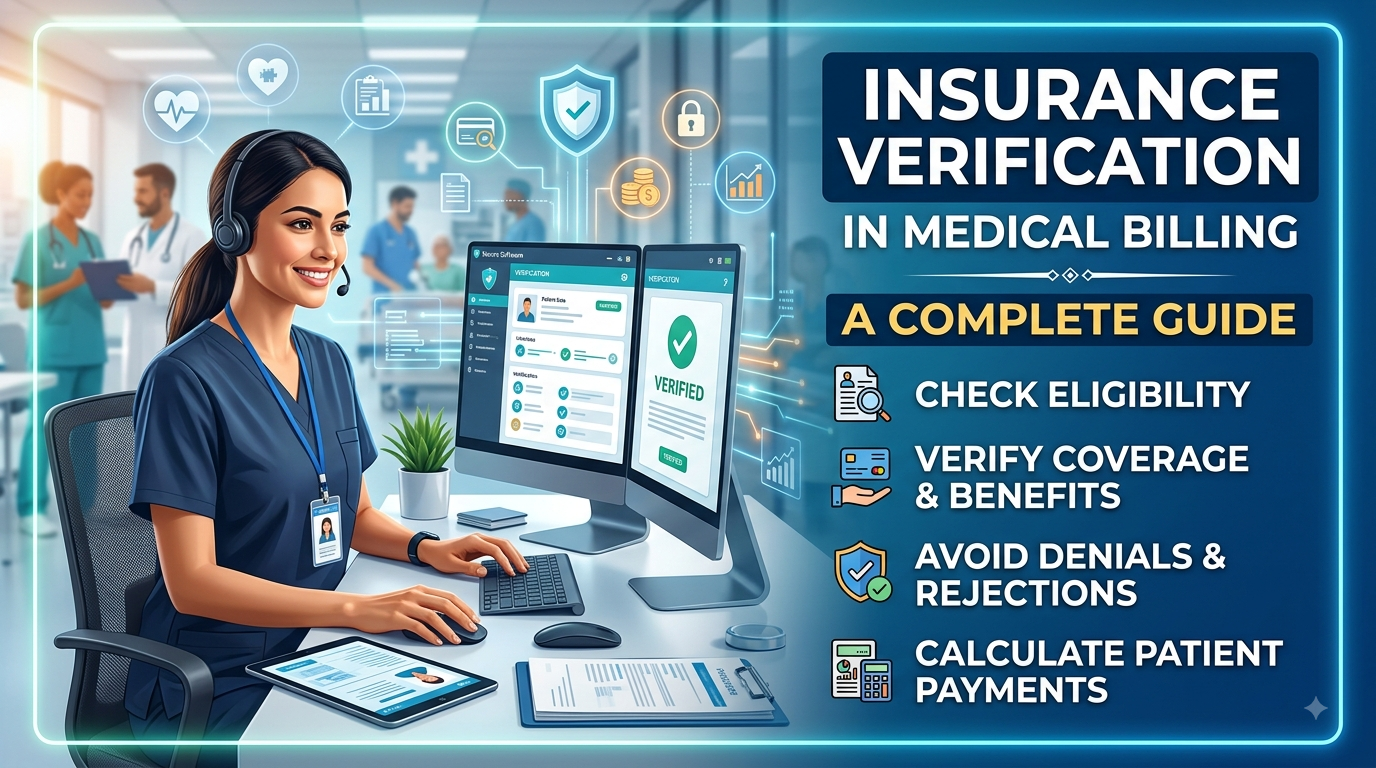
A patient registers for their appointment, receives medical attention, leaves the practice, and anticipates a problem-free billing experience. A day or so later your billing specialists realize that this patient has no active insurance, this provider is outside of their network, or the rendered service isn’t part of the patient’s plan, leaving their practice staring at a potentially denied claim, delayed reimbursement, or an unaddressed patient balance. This is the reason why insurance verification is such an important part of the RCM. Medical facilities use this practice to verify that patients have active coverage (that will likely apply to their given procedures or services) in advance of rendering them. Reliable eligibility and benefits verification processes verify the right info, before your claim is created and can further assist your staff to better understand patient liabilities. According to CMS, HIPAA eligibilty and benefits inquiry transactions enable facilities to verify a patient’s eligibility and benefits coverage and associated expenses:
“Standard for electronic transactions for health plan eligibility and benefit inquiries and response. For use by plan sponsors and health care plans and providers …”
This guide details everything you need to know about the processes: how the work, exactly what data needs verification, frequent errors your team should avoid, and the benefits professional RCM such as noventra-rcm.com can bring.
What is Insurance Verification in Medical Billing?
What to Expect Now?
How is a Patient’s Insurance Verified?
Information for Which Information Can the Team Benefit Verification from Information Verification vs. Benefits Verification-Which Step Do Facilities Utilize Insurance verification in medical billing refers to the process of assessing whether a patient’s health insurance policy is active as it pertains to their given medical services.
In this stage your billing specialists verify that patient data matches the payer’s files and that said policy will cover expenses for that specific interaction, with no issues. In this stage the following might be checked:Patient name and date of birth;The insurance member identification number;The group number if applicable;The plan’sname;The policy’s status (whether the plan remains active or not);The effective date(s); andtermination date(s) (if they exist;A patient’s estimated Copayment, deductible and also coinsurance information;Maximum out-of-pocket benefit maximums;If your provider and patient are within the applicable insurance plan networks;Is this service even a covered service; andDo referral or prior authorization apply;Each of these details will differ based on the type of payer and the particular plan.
Electronic interactions use the standardized ASC X12N 270/271 eligibility and benefits query.
While 270 (inquiry) and 271 (response), HIPAA acknowledges the electronic standard for querying patient insurance and medical coverage. All said and done it is essential for everyone to know why the process matters to practice finances not merely for records and for workflow efficiency.
Why Insurance Verification Matters to Medical Practices
There’s nothing worse than expecting payment from insurance for a service just to realize nothing comes.
If details weren’t right in terms of claims submission or no checkup was taken out in the first place, you could possibly miss on a lot money. Because an incorrect and incomplete payment is sometimes returned from insurance carriers, your team’s ability to deliver it efficiently will fail and further delay reimbursement payments for your facility. Here’s what can happen if checks are taken out: It ensures valid coverage verification of policy; This may assist in estimating the patient’s deductible amount of medical insurance, your coinsurance and estimated copayment; Claims submitted by your office can be prevented; Improved management for your revenue cycle.
Who Uses it for Medical Claims?
“The Insurance Verification Specialist at my office… checks and compares an insurance carrier against patients by the requested procedure code(s) based on the provider and office on behalf of the patient” according to another, the work being done here isn’t limited. From patient front desk to medical billers; the team needs awareness of the benefits available; The insurance verification process checks to ensure that patient’s plan of insurance for provided services is valid for the scheduled procedure or a consultation between your team and the patient. Insurance eligibility and health verification will determine that a plan exists and is in effect on the date a service is performed in order to assist with timely claim submitting.
How does an insurance verification work?
An ordinary verification of an insurance in a medical billing work process might go something like:
Step 1: Gathering patient insurance information
The process starts when the patient gives his/her insurance details when at the front-desk.
Staff would need to gather the following details:
Insurance Card
member ID
group number
Subscriber’s Information
patient’s information/details
secondary Insurance information (if there is one)
Accurate patient’s details are vital as incorrect patient’s details (demographics or insurance) may become a hindrance to the verification process.
Step 2: reviewing the insurance information
The front-desk/billing team will check the information for potential inaccuracies.
For example, the team might examine if the member ID and the patient details (name and D.O.B.) are consistent with the information submitted.
Step 3: verifying coverage with the payer
The clinic may have to check coverage with the payer through either the proper payer portals, clearinghouse tools, an electronic transfer, or another appropriate technique. For FFS Medicare patients, CMS’s HETS 270/271 function can be used by authorized personnel to check eligibility and get replies electronically.
Step 4: reviewing benefits
The team will analyze and gather any relevant benefits for the proposed service which may include copayment, deductible, coinsurance, network participation and authorization requirements.
Step 5: Documenting the results
The verification results should be recorded properly in the database of the practice. It is important that staff know what was checked and the details of each verification performed.
Step 6: Sharing relevant information
The necessary team member can contact the patient/provider for clarification of any suspected issue before services are rendered. This allows the staff to resolve any potential complications early before submitting the claims. An efficient system workflow makes it easier to keep track of these various steps and more particularly in practices with a considerable number of appointments scheduled throughout a day.
Which details should be checked before an appointment?
The level of verification required should be decided with reference to patient and the service offered. Commonly checked details include:
Patient Information
Full Name
D.O.B.
Address
Patient’s relationship with the subscriber
Insurance Information
Payer Name
Member ID
Group number
Subscriber Name
Policy Information
Effective and Termination dates
Financial Information
Copayment Amount
Deductible
Balance deductible remaining (if applicable)
Co-insurance
Out-of-pocket amount
Service Details
Is the planned service coverable?
Are there any network requirements?
Are there any referral requirements?
Is prior authorization required?
Any benefit limitations?
What is typically checked during verification will vary from payer to plan and also for different specialties and services offered.
Common mistakes made in insurance verification
Many practices that do verification even fail on it because their work process is inefficient.
Verifying only once
insurance details may be different after a certain time. An active policy does not guarantee your patient’s insurance has been active all this time; even if it was active few months ago, it could have been inactive now. Hence it is important that the practice develops a consistent verification workflow to deal with recurrent patient appointments.
Checking only the eligibility of a policy but not the benefits
A policy may be active; that does not mean a service will be payable. You will need to verify benefits if the situation warrants such need.
Ignoring the secondary insurance (if available)
Many people have dual insurance and if this information is missed by the practice, it could cost them extra amount when dealing with billing work.
Using out-dated patient details
The details that a patient may have provided may change from time to time with regard to name, address, Member ID etc. These must be kept current for proper billing work.
Not verifying for network participation status of the patient
The patient may have an active insurance but failure to verify the network participation of that network will ensure that the practice is likely to face problems as this affects the processing and the patient responsibility in cases like that.
Not documenting the verification result
If the details regarding the verification are not documented carefully, other workers may again conduct a re-verification on the same details which is double work and the documentation should explain in detail what exactly has been checked by whom.
How medical practices can improve the insurance verification process?
Improving the verification process does not require the investment in a complicated system. A consistent workflow may lead to significant improvements:
Creating a Standard verification Checklist
A checklist for the staff to refer to before and during the verification process can ensure that nothing is missed, even during peak hours.
Verifying Before scheduled appointment
Whenever possible, the verification should take place before the service is performed by the clinic/provider. This would enable staff to solve possible issues at the earliest possible time.
Keeping insurance details updated
Staff may sometimes have to request patients to re-verify their insurance information, especially when the patient is switching companies, carriers or plans.
Using Electronic verification tools
There are certain tools available through payer portals and third-party interfaces which can automate the work to quite an extent by enabling the user to retrieve eligibility details more quickly and electronically. CMS says, “eligibility operating rules will support timely electronic access to certain eligibility and financial details.”
Regular Staff Training
The front desk and billing personnel needs to know the definitions of terms like eligibility, benefits, authorization and patient responsibility, and identify cases that require additional expertise.
Tracing common problems
An overview of recurring insurance issues experienced by the practice helps in developing suitable workarounds. For instance, consistent eligibility issues might imply flaws in the registration process, while similar authorization problems could point to the need for a revised workflow.
It should be kept in mind that verification should not just be about checking information but is essentially about using verified information and identifying the opportunities that could improve the practice’s entire revenue cycle.

How is the insurance verification related to the medical billing?
An efficient insurance verification process can benefit several stages of a practice’s revenue cycle:
Patient Registration
Claim Preparation
Claims Submission
Patient Responsibility Estimation
Denial Management
Account Receivable Management
Payment Collection
Revenue Cycle Efficiency
For example, if an inactive policy is discovered prior to an appointment, the practice staff have an excellent opportunity to try to resolve the problem before sending a claim. So is a situation where benefits or network coverage has to be established before the services are performed; this could help in managing accounts effectively and communicating proper patient charges. However, it must be clearly noted that any insurance verification, however efficient, does not guarantee the payment of an insurance claim but it merely gives an idea that the practice may get what they bill for, based on the details verified.
When a practice should consider outsourcing the verification?
For practices that are small or even growing, handling eligibility and benefits verification effectively may prove to be a challenge; especially considering the existing workload of reception, patient communication, billing, etc. Outsource verification if:
Verification is causing staff backlog.
There are frequent omissions of eligibility checks.
Billing errors related to insurance take up a lot of time.
The staff spends an extended period to connect with payers/billing companies.
The practice gets a high number of patients daily.
Administration work is obstructing other vital tasks of the practice.
Noventra RCM can fulfill any such requirements through comprehensive medical billing and revenue cycle management services inclusive of verification processes.
How Noventra RCM can help with verification?
Verification demands accuracy, diligence, and a clear understanding of how the insurance aspects fit into the medical billing ecosystem. Noventra RCM provides specialized medical billing and revenue cycle solutions that cater to medical facilities; these include efficient handling of insurance verification processes in combination with other aspects that contribute towards overall RCM efficiency. These facilities help practices get a hold of the connection between patient details, eligibility, claim submission, denials management, and accounts receivable. If your practice is unable to get through the sheer bulk of checking insurance information or has been repeatedly frustrated by avoidable billing claims, it might be time to delegate your verification needs to Noventra RCM.
Frequently Asked Questions
What is Insurance Verification in Medical Billing?
Insurance verification in medical billing is the method used to identify a patient’s health plan. By following procedures, practices ensure they have valid coverage information on hand, as well as relevant details from that health plan before proceeding with any billing of care.
What’s the Difference Between Benefits and Eligibility Verification?
Eligibility verification determines if a patient is currently covered. Benefits verification dives deeper into specifics of coverage, such as what services may be paid for by a specific health insurance plan and any patient out-of-pocket responsibilities.
Why is Insurance Verification Important?
Checking eligibility for insurance helps medical professionals find potential problem areas concerning coverage ahead of submitting their insurance claims. It also helps their staff understand plan benefit details, as well as prepare for any cost patients may have to pay.
How Frequently Should Insurance Eligibility be Verified?
Depending on the medical practice’s workflow, the nature of the services offered, the patients being seen, and the insurers providing them with coverage, there isn’t a one-size-fits-all answer. Practices should work with the payers on their roster to create a seamless workflow.
Will Insurance Verification Guarantee Payment?
No. Verifying an insurance benefit or eligibility shouldn’t ever promise that the medical claim that follows it will pay. A health insurance claim is contingent on several factors. Medical service providers, plan beneficiaries or payers must adhere to payer-specific guidelines concerning networks, deductibles and copayments, and claims forms.
Can I Outsource Insurance Verification?
Yes. Many medical billing providers andRCMservices take a client on and do their insurance verification in-house on behalf of the medical facility. Ensure you speak to the vendor about the specific set of tasks they will execute with the plan and the plan provider’s database, and keep them on track throughout the rcm process.
Conclusion
Medical practice providers must implement an effective insurance verification process as the primary step in initiating efficient, reliable health claims following the rendering of services. By verifying the accuracy of an insurance patient plan and following suit on details such as the eligibility of a benefit; determining the applicable coinsurance amount; and confirming whether an out-of-network insurer may be considered in some cases, organizations can prepare for almost any billing situation with which they might be faced. Whether performing the insurance verification in-house, or by contracting medical billing with a service that may also offer insurance eligibility verification, healthcare providers can reduce administrative burdens by knowing their patients and their insurance benefits in full detail.
Your medical organization has an all-encompassing collection of administrative necessities-each having a role to play in how smoothly you can offer your patient-care, your organization can thrive, and our organization can prosper-together. To help medical organizations alleviate administrative load while improving cash flow, NoventraRCM provides efficient and dependable full-servicemedical billing,patient verification and eligibility verification services, and fully streamlined revenue cyclemanagement(rcm) solutions. To work in partnership with NoventraRCM, contact us today and take the first step toward optimal efficiency of your billing operations.